What LFB Does Differently
Two things matter in a construction accident case: identifying every party who shares responsibility for what happened, and making sure the full value of your claim is accounted for.
Injuries sustained at construction sites can sometimes be very complex, involving multiple defendants, multiple plaintiffs, third-party defendants, claims, and counter-claims. Due to this, aggressive and thorough representation is necessary to ensure that none of your rights are violated and that you get compensation that is commensurate to the sustained injuries. LFB has the experience and expertise to fight for you.
A lot of firms handle workers’ comp. Fewer handle the civil side, and fewer still do both while also negotiating the medical liens and bills that come out of a serious injury. At Ladendorf Fregiato & Bigler, we don’t hand clients a settlement check and leave them to sort out what they owe. We negotiate medical liens as part of the case, and we don’t take a fee larger than what you walk away with. Learn more about our fee structure here.
We’re also a small firm. That means you talk to an attorney, not a case manager, and we’re available for home or hospital visits when you’re not in a position to come to us.
Answers To The Complex Questions in Construction Accidents
Can I sue if I’m already receiving workers’ compensation? In most cases, yes — but not against your employer directly. Indiana’s workers’ compensation system provides an exclusive remedy against your employer, meaning you generally can’t sue them in civil court. However, if a third party — a general contractor, subcontractor, property owner, or equipment manufacturer — was responsible for your accident, you can pursue a civil claim against them while also receiving workers’ comp benefits. Those two tracks can run simultaneously.
What if I’m an independent contractor, not an employee? Workers’ comp typically only covers employees. If you were classified as an independent contractor at the time of your injury, you likely aren’t entitled to workers’ comp — but you may have stronger options in civil court, since the exclusive remedy limitation doesn’t apply in the same way. How you were actually classified (not just how your contract reads) matters here.
What if I was partially at fault for my accident? Indiana follows a modified comparative fault rule. As long as you were less than 51% at fault, you can still recover damages — though your recovery is reduced by your percentage of fault. In a workers’ comp claim, fault generally isn’t a factor at all. In a third-party civil claim, it can be, which is why how the accident is investigated and documented matters from the start.
What does OSHA have to do with my case? OSHA violations by a contractor or employer don’t automatically create liability in a civil case, but they’re relevant evidence. A documented OSHA violation can support your claim that someone failed to maintain a safe worksite. We look at OSHA records and any inspections or citations related to the site as part of evaluating a construction accident case.
How long do I have to file a claim? In Indiana, the statute of limitations for a personal injury claim is generally two years from the date of the accident. Workers’ comp has its own deadlines, including requirements to report the injury and file claims with the Indiana Workers’ Compensation Board. Construction accident cases also often involve evidence that disappears quickly — site conditions change, equipment gets repaired or removed, and witnesses become harder to locate. The sooner you speak with an attorney, the better position you’re in.
What if a family member was killed in a construction accident? Construction fatalities are, unfortunately, not uncommon. If a family member died as a result of a construction site accident, you may have a wrongful death claim in addition to any workers’ comp death benefits available. Learn more about wrongful death claims in Indiana.
What are some of the dangers of a construction job?
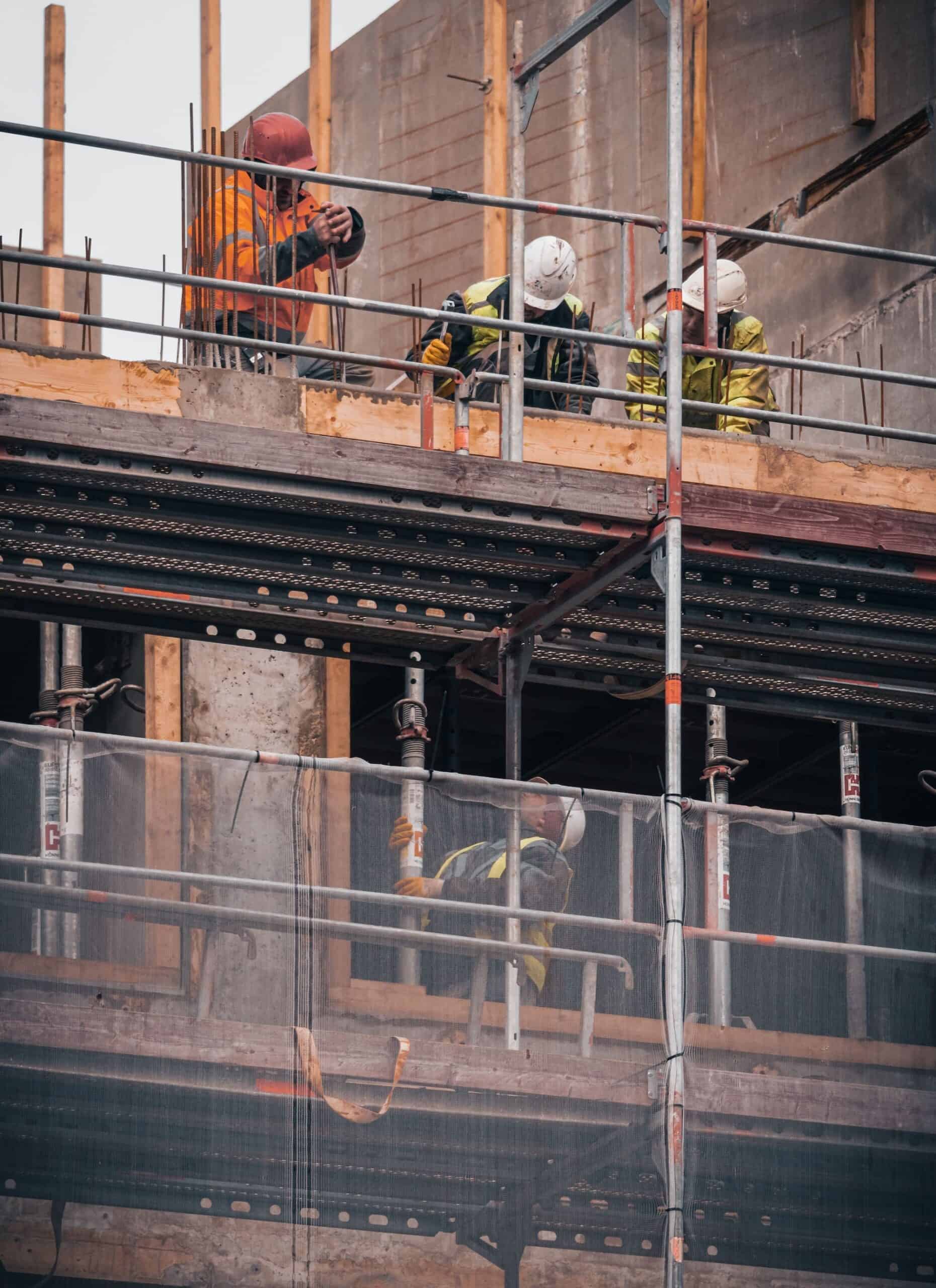
Workers of all varieties face serious injuries at construction sites of all kinds. Some of the most hazardous threats include:
- Machinery malfunctions
- Scaffolding accidents
- Falling objects
- Caught between objects
- Burns
- Lacerations
- Broken bones
- Exposure to toxic substances
Any one of these could damage the long-term health of a construction employee.
Am I entitled to workers’ compensation?
Most employers in Indiana are required by law to have workers’ compensation insurance. If your injury occurred at your workplace or while you were on the clock – even on an unpaid break – you may have the right to workers’ compensation. You may also have a personal injury case.
Does fault matter? What if someone else was responsible for my accident?
In workers’ compensation cases, fault does not affect your right to recover compensation. The purpose of workers’ compensation is to pay workers’ damages from on-the-job accidents. Even if your actions contributed to the incident, your employer’s insurance could likely still cover you.
If you’re partially at fault for causing your own injury it can affect your ability to recover from a liable third party. That’s why it’s important to speak to an attorney experienced at investigating complex cases and navigating the Indiana law of comparative fault.
How much is my case worth?
There is no way to determine the value of your claim without speaking to an attorney in person. When you contact us at Ladendorf Fregiato & Bigler, one of our team members can sit down with you to discuss particulars. We will give you an honest evaluation of what to expect from your case.
If you’ve been hurt on a construction site in Indianapolis or anywhere in Indiana, call us.
We offer free consultations, and we’re available evenings and weekends. If you’re not able to come to us, we’ll come to you. There’s no fee unless we recover compensation for you. Call 317-842-5800 to discuss your case.